

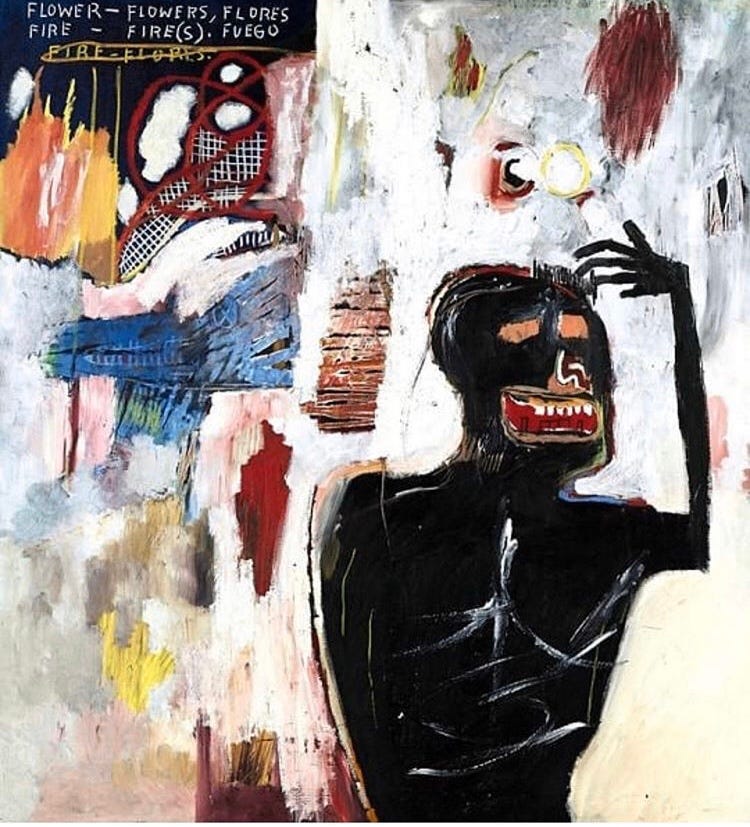
Queerness has often been named through the language of evil.
Not metaphorically. Not accidentally.
But as a way of making difference legible as danger.
naming the danger
Across literature, art, and cinema, queer figures appear as devils, demons, monsters, corrupters. Keeping aside pure theology, queerness in its nature is read as a disturbance to order. The devil becomes a projection screen, a container for what a culture cannot metabolize. Excess desire. Gender ambiguity. Degradation. Pleasure without permission. Ways of living that do not stabilize reproducing for the sake of family, nation, God.
beyond identity: illegibility, threat and moral panic
In this sense, queer is not first an identity. It seeps through position.
Illegible. Unwanted. Threatening.
To call someone devilish is to translate fear into morality. What unsettles becomes obscene. What resists becomes blasphemous. What refuses reason is cast as irrational. The devil gives narrative form to panic. It turns discomfort into sin, difference into danger. This is why queer portrayals are so often framed as seductive, destructive, hypersexual, unstable. The accusation is not about what they do. It is about what they refuse to be.
I keep returning to this point because it keeps showing up everywhere, in both subtle and obvious ways. because of this, i only come out as queer when i feel safe enough (i mean here verbally, cause there are, apparently, traits people read onto me, onto queerness itself, both within the queer community and outside of it) . shall i say i’m half-closeted? funny how coming out is never a single, one-time, completed act.
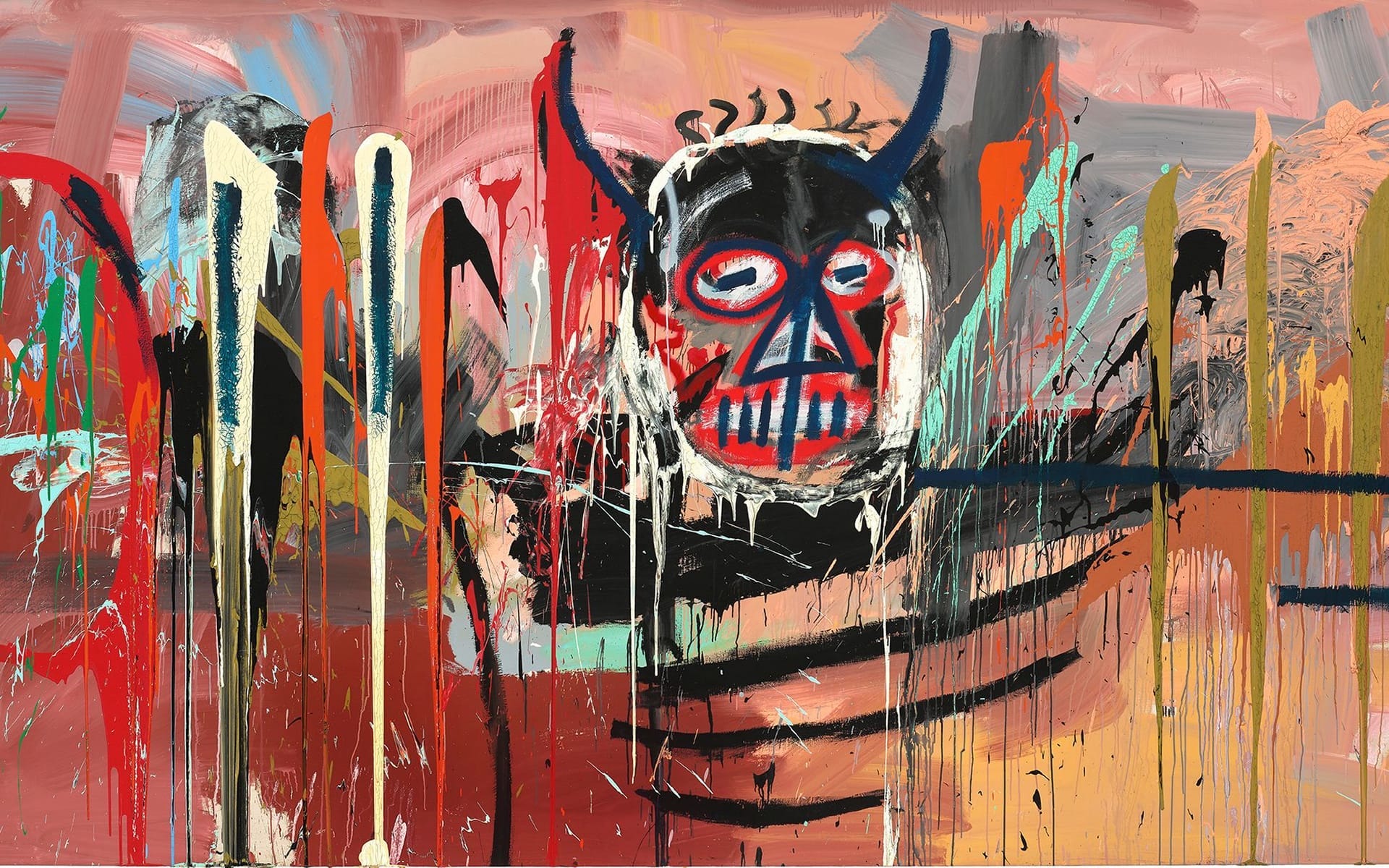
I, myself, have been struggling to cope with the inability of adhering to normalcy. in a body that fights against my will, my desire, i have felt alienated, disconnected to my humanly body, I have been alienated by others who could not, cannot comprehend. in a way, i feel inhuman. is this a mere consequence of queerness being considered incongruous to human nature?
queer theory and cultural logic
Queer theorists like José Esteban Muñoz and Mel Y. Chen help clarify this mechanism. When Muñoz writes in Cruising Utopia that queerness exists as a horizon, “a mode of being in the world that is not yet here,” he names why queerness so often appears as monstrous or diabolical. What cannot be integrated into the present order is pushed outside it. The devil marks what resists normative time, moral utility, and respectability. Not a character, but a temporal and ethical position assigned to those who do not align.
Mel Y. Chen, in Animacies, traces how bodies are hierarchized according to perceived rationality, purity, and liveliness. Queer, racialized, and disabled bodies are repeatedly framed as toxic, contaminating, irrational. To be marked as monstrous or devilish is to be stripped of legitimacy and protection. What we call evil often names this process of exclusion, the management of bodies that disturb the fantasy of order.
cinema and art: queer excess in action
The devil is obscene in the literal sense. Off-scene. Improper. Too much.
Queer bodies are treated the same way. Too visible. Too expressive. Too erotic. Not simply immoral, but inappropriate. A contaminating presence. Something that should stay hidden, unnamed, or punished.
Pasolini’s Salò, or the 120 Days of Sodom stages this logic with brutal clarity. Evil appears not as supernatural force, but as social order pushed to its obscene limit. Fascism, sexuality, and power are ritualized, aestheticized, made systematic.
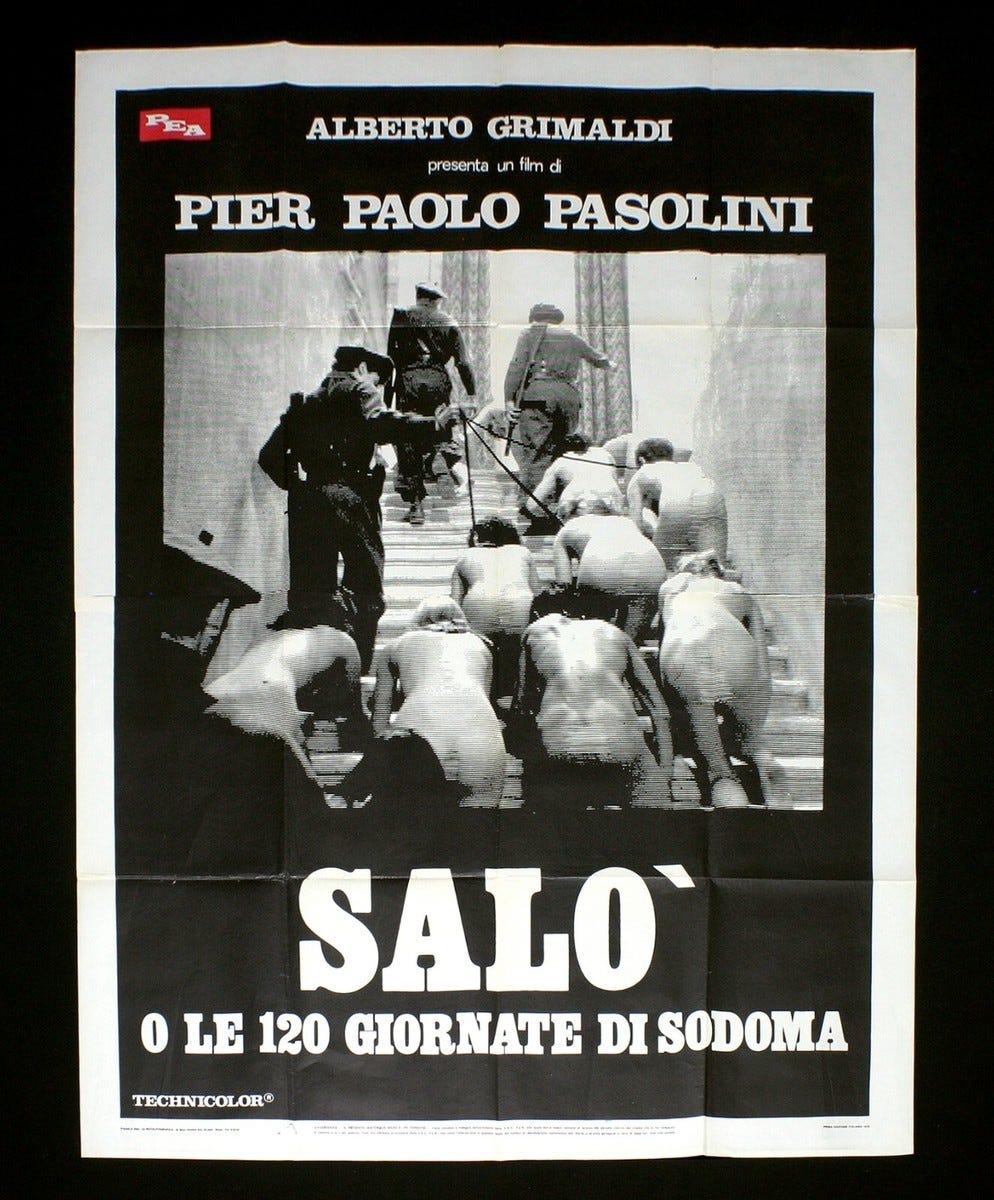
Queerness enters not as identity but as excess, as the unbearable truth of pleasure entangled with domination. The film’s condemnation as perverse, degrading, unwatchable is part of its meaning. Salò was treated as devilish because it refused moral comfort. It showed desire without redemption. Pasolini himself, openly queer and politically dissident, was framed as corrupting culture. The devil here is not the acts depicted, but the refusal to sanitize them.
This pattern extends beyond art into social life. In Shaming the Devil, historian Winston James examines how Black radical and queer figures were disciplined through accusations of immorality and deviance, often by their own communities. Respectability depends on sacrifice. Certain bodies must be cast as dangerous so others can appear acceptable. Here, the devil is racialized and sexualized. Queerness becomes the figure that must be disavowed in order for moral legitimacy to be secured. Shaming the Devil is not about eradicating evil, but about producing order through exclusion.
Marilyn Manson’s videos make the cultural script of queer as devil visible with almost clinical precision. He does not invent the association; he embodies it, amplifies it, plays with it. In The Beautiful People, his exaggerated makeup, gender-ambiguous costume, and grotesque choreography turn uniformity and power into spectacle. The scene in which Manson stomps among throngs of contorted, hyper-masculine bodies, the camera angled low and aggressive, renders his figure both commanding and unsettling, obedience and transgression collapsing into one frame. In Antichrist Superstar, his antichrist persona, drenched in black leather and latex, performs a ritualized inversion of religious iconography, blending eroticized danger with theatrical menace.
The outrage they inspire is exactly what the work is pointing to, and it is also exactly what we expect to see.
The public response, eg. the hysteria from parents, politicians, and religious authorities, was entirely predictable. Manson stages the irony of moral panic. The devilish reading is not his imposition but society’s projection. His work exposes the way queer or transgressive bodies are legible as evil, showing that outrage is rehearsed, coded, and socially inevitable. Queerness is read as dangerous precisely because culture demands it be, and the devil is the figure onto which that demand is projected.
Cinema repeatedly returns to this structure.
In Kubrick’s Eyes Wide Shut, queerness circulates obliquely through masks, secrecy, and ritual.
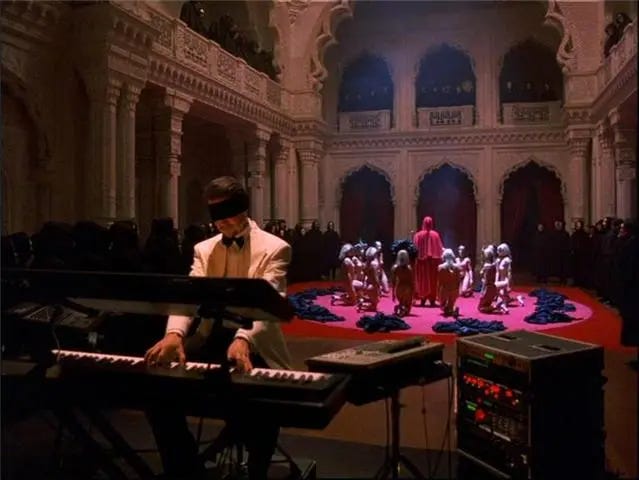
The infamous orgy scene borrows the aesthetics of satanic ceremony. Cloaks. Candles. Chants. What is being marked as dangerous is not sex itself, but unsanctioned desire. Desire without transparency, without narrative justification. The masks signal both protection and threat. To desire anonymously is to become monstrous. To step outside normative sexual scripts is to risk being cast as evil.
pleasure, fear, and the persisting devil
The devil fascinates because it is never only feared. It is watched. Lingered on. Secretly admired. This is where pleasure enters. The overlap between the so-called bad and what feels alive. Excess. Refusal. The thrill of not fitting.
It strikes me again and again how persistent this pattern is, how predictable, yet still so compelling.
Queerness lives here, in this unstable zone. In crossing boundaries. In refusing fixed categories. In being legible and unreadable at once.
To name queer as devil is to expose the violence of morality itself.
The devil is the queer of ethics.
The figure that holds everything a society disavows, then calls evil so it does not have to listen.
And yet, that figure persists.
Because what is named devil is often what refuses to disappear.
Bibliography
Chen, Mel Y. Animacies: Biopolitics, Racial Mattering, and Queer Affect. Duke University Press, 2012.
James, Winston. Shaming the Devil: African-American Radicalism and Moral Panic.
Manson, Marilyn. The Beautiful People. Video. 1996.
Manson, Marilyn. Antichrist Superstar. Video. 1996.
Muñoz, José Esteban. Cruising Utopia: The Then and There of Queer Futurity. NYU Press, 2009.
Pasolini, Pier Paolo. Salò, or the 120 Days of Sodom. Film. 1975.
Kubrick, Stanley. Eyes Wide Shut. Film. 1999.
I am an independent writer, creating work that unfolds without compromise. Supporting me allows this voice to thrive, to explore, reflect, and hold space for ideas that might otherwise go untold, smothered, unheard. Your support helps sustain my writing, free from ads and external influence.
so beautiful to read such an intricately researched piece on queerness. coming from the philippines and growing up in a religious household (as a lesbian, half-out crowd, hello...) our identity presented as moral failure in media really does have so much to do with perception. i felt this articulated that societal projection so transparently and sincerely.
still, we own everything that we are.
SO MANY BARS BRO:
"To call someone devilish is to translate fear into morality. What unsettles becomes obscene."
"The accusation is not about what they do. It is about what they refuse to be."
"I have been alienated by others who could not, cannot comprehend. in a way, i feel inhuman. is this a mere consequence of queerness being considered incongruous to human nature?"